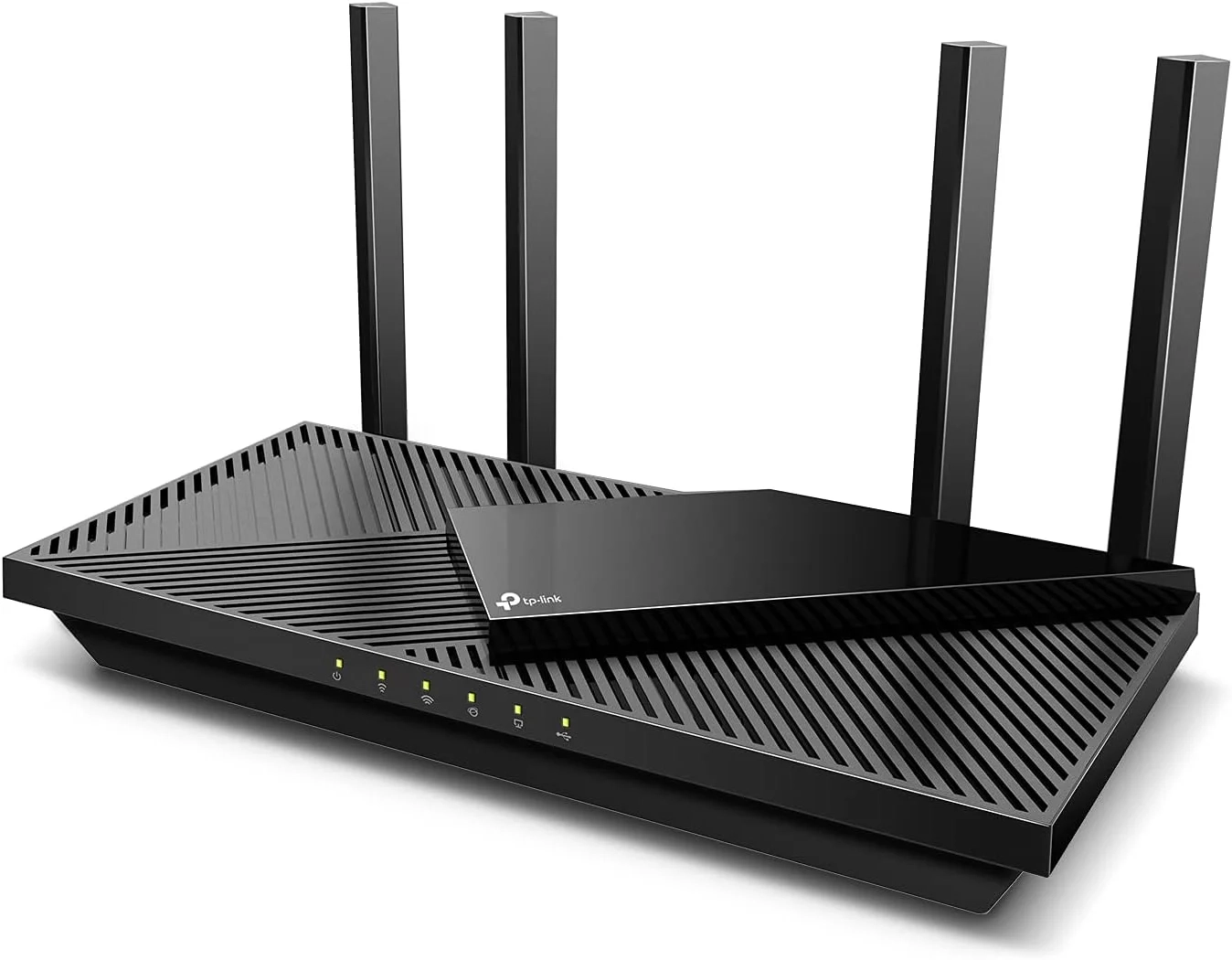
TP-Link Archer AX55 AX3000 Wi-Fi 6 Gigabit Router
A multiple voltage compatible device, operating on 100-240V, offers exceptional flexibility for international use. This article explains how this broad voltage range works and its key benefits for travelers and global consumers.
About This Topic
This topic covers the key features and benefits of modern Wi-Fi 6 routers, specifically those designed to handle the demands of today’s connected households. We focus on explaining how advanced technologies translate into real-world improvements in speed, reliability, and security for your entire home network.
Understanding these features helps you make an informed decision when upgrading your home Wi-Fi. This advice is ideal for:
- Households with many connected devices, including phones, laptops, smart TVs, and gaming consoles.
- Users experiencing slow speeds, buffering during 4K streaming, or lag in online gaming.
- Remote workers and students who require a stable and secure connection for video calls and large file transfers.
- Families looking to manage screen time and enhance network security for smart home devices.
A common misconception is that a faster internet plan alone solves all Wi-Fi problems. In reality, an outdated router can bottleneck your connection, causing congestion even with high-speed internet. Modern Wi-Fi 6 routers manage multiple devices efficiently, ensuring that your available bandwidth is utilized effectively.
Core Benefits Explained:
- Multi-Gigabit Wi-Fi Speeds: With separate high-speed bands (e.g., 2402 Mbps on 5GHz for major devices and 574 Mbps on 2.4GHz for wider coverage), these routers support seamless ultra-high-definition streaming, faster large file downloads, and smoother performance for bandwidth-intensive tasks. Advanced models also offer built-in VPN functionality for secure remote access.
- Reduced Lag and Congestion: Technologies like OFDMA allow the router to communicate with multiple devices simultaneously instead of sequentially. This is crucial for a responsive experience, eliminating jitter during gaming or video calls even when others are streaming.
- Expanded and Reliable Coverage: Features like high-gain external antennas and Beamforming technology focus Wi-Fi signals toward your devices, strengthening the connection and extending reliable coverage to eliminate dead zones in larger homes.
- Enhanced Device and Network Longevity: Target Wake Time improves battery life for Wi-Fi-connected smart devices. Improved hardware cooling designs prevent overheating, which maintains peak performance and protects the router from slowdowns due to thermal throttling.
- Integrated Network Security and Management: Comprehensive systems like TP-Link HomeShield provide essential layers of protection, including security scans for vulnerabilities, identification of connected IoT devices, parental controls, and network prioritization (Quality of Service) to ensure critical applications get the bandwidth they need.
By integrating these technologies, next-generation routers provide a robust foundation for a fast, secure, and responsive home network capable of supporting current and future digital activities.